Start with what the door is doing
A door that will not close fails in a handful of specific ways, and each one points somewhere different. Match yours before you touch anything.
| What you see | Most likely cause | Check |
|---|---|---|
| Door will not start down, opener light blinks | Safety sensors blocked or misaligned | Sensors |
| Door goes partway down, then comes back up | Something on the track, or the force limit tripping | Track, limits |
| Door closes only while you hold the wall button | Safety sensors (holding the button bypasses them) | Sensors |
| Wall button works, remotes do not | Lock mode on the wall console, or dead remote batteries | Lock mode |
| Nothing happens from anywhere | No power, a tripped outlet, or a broken spring | Power |
| Motor runs, door stays put | Trolley disengaged, or a stripped drive gear | Opener |
1. Check the safety sensors first
Every opener made since 1993 has two small sensors on the door track, about six inches off the floor, one on each side. They send an invisible beam across the opening, and if anything breaks the beam while the door is closing, the door reverses. Each sensor has a little LED. When everything is right, both lights are solid. One brand uses green and amber, another uses two greens, but the rule is the same: a blinking or dark light means the sensors are not seeing each other.
- Clear the beam. A trash can, a bike tire, a snow shovel leaning on the track, a cobweb across the lens. Move it and try again.
- Wipe the lenses. Dust, salt film and a fingerprint are enough. A dry cloth is fine.
- Check the brackets. Sensors get kicked and clipped by bins. If one is tilted, loosen the wing nut, nudge it until the light goes solid, and tighten it.
- Block the sun. Low sun in the morning or evening can flood the receiver. Hold a piece of cardboard over the sensor on the sunny side and press the button. If the door closes, that is your answer; a sun shield fixes it permanently.
- Follow the wire. The thin wires run up the wall and along the ceiling to the opener. A staple driven through one, a nick from a rake, or a wire pulled loose at the motor head will kill a sensor.
If the door closes normally only while you hold the wall button down, that confirms it: holding the button overrides the sensors for one cycle. Do not make a habit of that, because it also switches off the reversal that protects a child, a pet or a car bumper.
2. Look for lock mode on the wall console
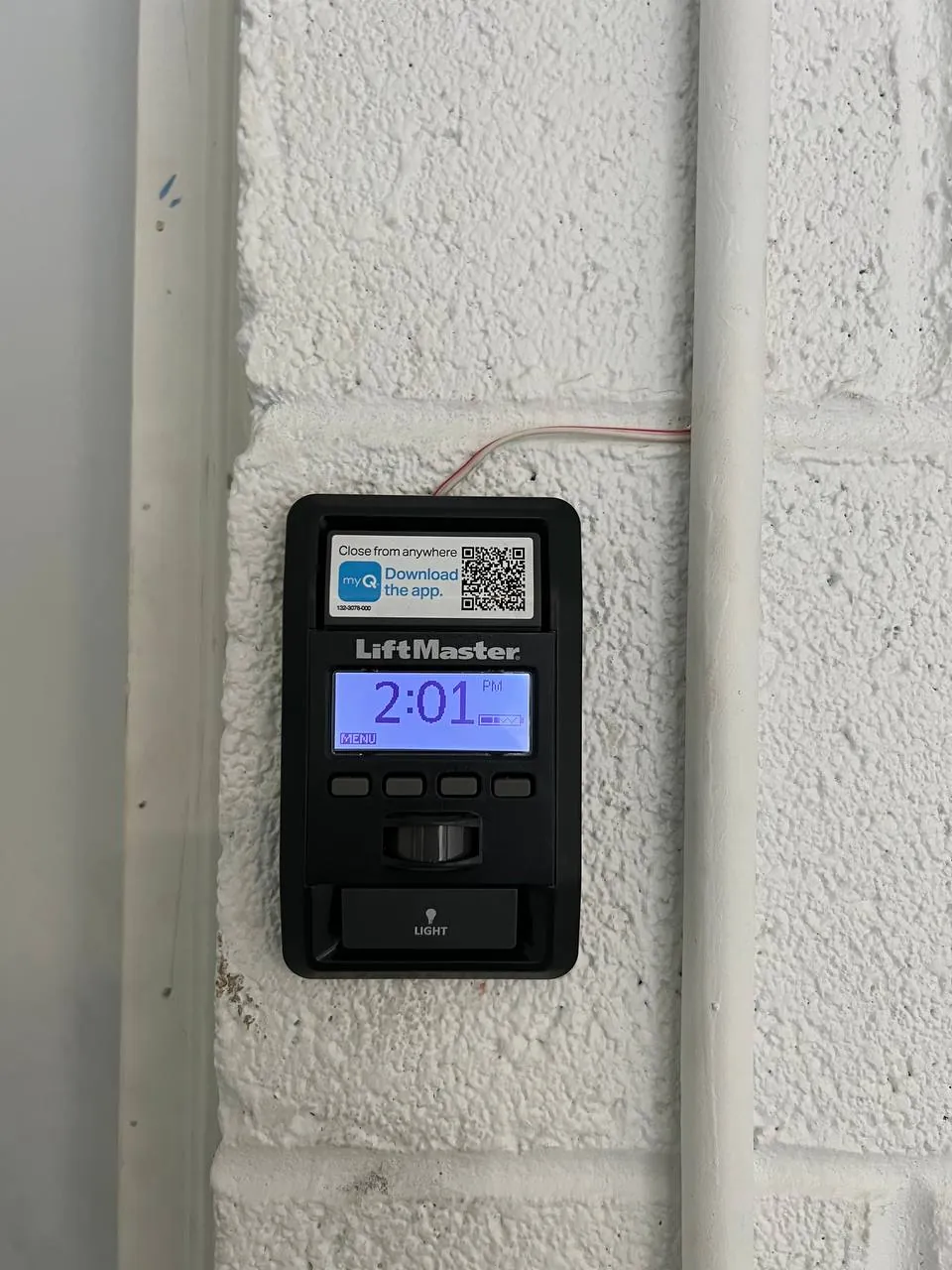
Most LiftMaster and Chamberlain wall consoles have a lock button. Hold it for two seconds and the opener ignores every remote and keypad until you hold it again. It gets pressed by accident when the console is by the door into the house. The tell is that the wall button still works and the console light flashes. Hold the lock button, wait for the light to go steady, and try the remote.
3. Look at the track and the floor
Walk the full length of both tracks with a flashlight. Leaves and packed snow in the bottom of the vertical track, a ball or a rake handle that rolled into the curve, a bent section where a car mirror caught it. Ice along the bottom seal is the winter version of the same problem, and it is worth its own read: why garage doors fail in the cold.
If a roller has popped out of the track or the door is hanging crooked, stop here. Forcing a door that has left its track bends the rail and can drop a panel. That is an off-track repair, and the door needs to be secured before anything else.
4. Travel and force limits
The opener has two settings that decide when the door has "arrived": a travel limit that says where the floor is, and a force limit that says how hard it is allowed to push before it assumes it hit something. If the door goes most of the way down and then comes back up with both sensor lights solid, one of these is the problem.
Common triggers: new weatherstripping that sits higher than the old, a floor that has heaved, or a door that has simply gotten heavier to move because the rollers and hinges are dry. On older units the limits are adjustment screws on the motor head; on newer ones the opener learns them, but only if the door is balanced and moving freely.
Turning the force screw all the way up "fixes" a door that reverses, and it also means the door will no longer reverse on a person. If the opener needs more force than it did last year, something on the door is binding. Fix the binding, not the setting.
5. Power, remotes and the opener itself
- Nothing works from anywhere. Check that the opener is plugged in and that the ceiling outlet's GFCI, or the one it shares in the garage, has not tripped. Press reset on any outlet with a button.
- Remotes dead, wall button fine. Batteries, then lock mode above.
- Motor runs but the door does not move. Someone pulled the red release cord, so the trolley is riding the rail without the door. With the door fully closed, run the opener once and the trolley should click back in. If instead you hear grinding while the motor runs, the drive gear has stripped. That is the most common opener repair we do, and it is a parts-on-the-van job.
- Door feels like it weighs a ton by hand. That is not the opener. Read what to do about a broken spring before you go any further.
Closing the door by hand, safely
If you need the door shut tonight and the checks above did not get you there, you can close it manually, with two conditions. First, the door must be in good balance: lift it a foot by hand and let go. If it stays put, the springs are fine. If it sinks or feels far heavier than a door should, stop, because lowering it by hand means holding the full weight. Second, pull the red release cord only when you can control the door, never with it fully open on a door you have not tested.
Once it is down, slide the lock bar or clamp a pair of locking pliers on the track above a roller so nobody can lift it from outside.
When to stop and call
- Both sensor lights are solid and the door still reverses.
- The door is heavy, crooked, or a cable is hanging loose.
- The motor grinds, hums, or runs without moving the door.
- You would have to raise the force setting to make it close.
- The door will not lock and the house is open for the night. Our emergency line is for exactly that.
What we do when we come out
Most doors that will not close are put right in a $100 tune-up: sensors realigned and their wiring checked, travel and force limits reset, hinges and rollers lubricated, the door balanced by hand, and the safety reversal tested against a block on the floor before we pack up. If the opener needs parts, a gear kit, a logic board or a new sensor pair, you get the price in writing before we fit anything, and it is nearly always finished the same visit. If the unit is old enough that parts no longer make sense, a new opener installed runs $500 to $700 with a two-year warranty on our installation and the manufacturer's warranty on the opener.